
All-Day Power on the Ice: The Lithium Solution for Modern Electronics
If you’ve spent any real time on the ice the last few seasons, you already know this: Ice fishing isn’t what it used to be. We’re not just dropping a flasher down the hole anymore. We’re running forward-facing sonar, multiple graph units, GPS mapping, live imaging, LED lighting inside the shack, charging phones, maybe even running a small heater fan or camera system. Modern ice fishing runs on electronics. And electronics run on power. The problem? Most people are still trying to power 2026-level gear with 2005-level batteries. Let’s fix that.
Why Power Matters More Than Ever on the Ice
When you’re fishing open water, you’ve got an alternator charging your batteries. On the ice, once you step off the truck or ATV, whatever power you brought with you is all you’ve got. That changes how you think about your setup. You need stable voltage, enough capacity to last all day, lightweight portability, cold-weather reliability, and confidence that your electronics won’t shut down mid-bite.
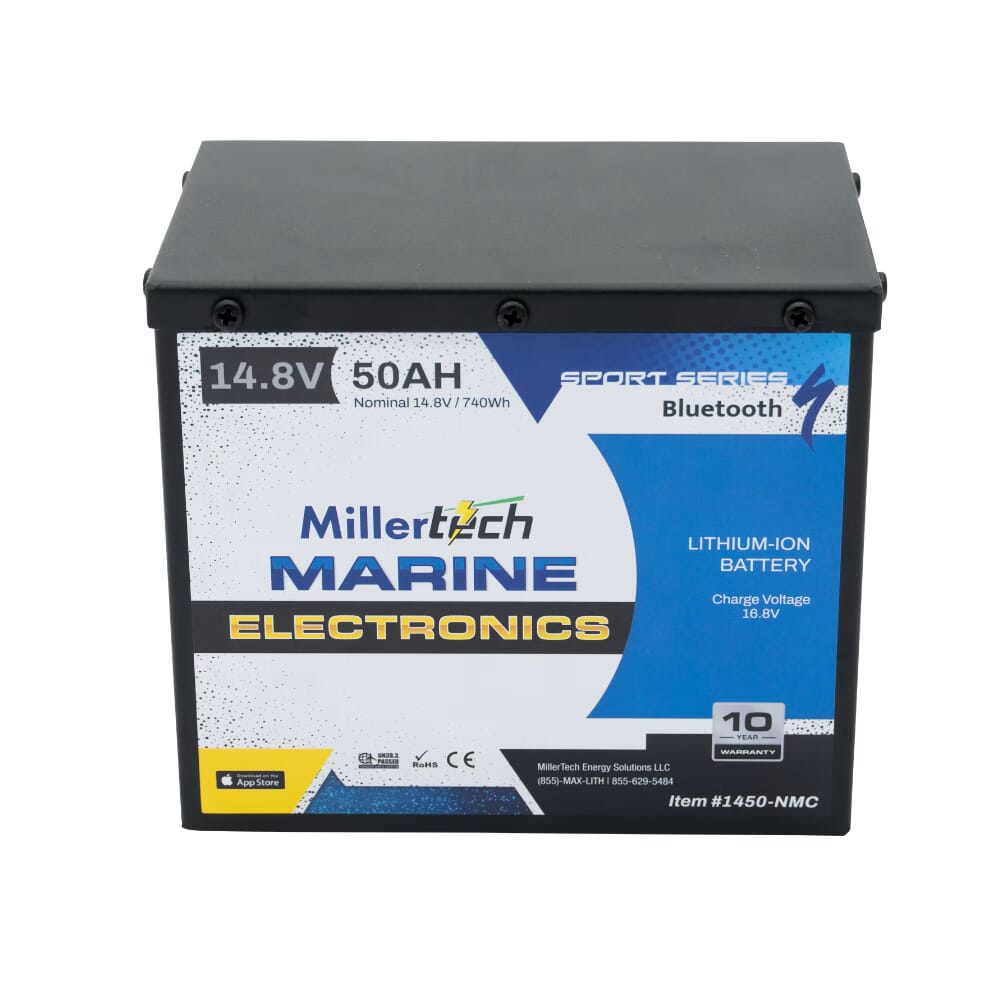
That’s where a purpose-built lithium solution like the MillerTech 14.8V 50Ah Marine Electronic Shuttle Battery starts to make a lot of sense.
Let’s Talk Real Numbers (Because They Matter)
This battery is rated at: 14.8 volts x 50 amp hours = 740 watt-hours of energy. That’s a serious amount of usable power in a compact, portable package. To put that into perspective: A typical forward-facing sonar setup may draw around 3 to 5 amps depending on brightness and settings.
A 12-inch graph might pull 2 to 3 amps.
Add lighting and charging devices and you could easily be in the 6 to 8 amp range total.
With 740 watt-hours available, you’re not talking about a few hours. You’re talking about realistic, all-day runtime for most ice setups. And the key word there is usable. Lithium doesn’t sag the way lead-acid does. You don’t lose performance halfway through the discharge curve. Your electronics see stable voltage longer, which means fewer random shutdowns and cleaner screen performance.
Why Voltage Stability Matters on the Ice
This is something most anglers don’t think about until it happens. When voltage drops, electronics start acting strange. Screens dim. Units reboot. Sonar performance drops. Forward-facing systems get unstable. Cold weather makes that worse with traditional batteries. Lithium, especially a properly engineered 14.8V system like this 50Ah unit, holds voltage much flatter under load. That means your electronics perform the same in hour six as they did in hour one. That consistency is everything when you’re dialing in fish.
Built for Electronics — Not Just “Power”
This isn’t a jump pack. It’s not a generic deep cycle battery. It’s designed specifically for electronics-heavy environments. When you’re running sensitive sonar equipment, you want clean, stable output, reliable discharge under load, and smart internal management. This battery includes an integrated Battery Management System (BMS) that protects against over-discharge, over-current, and temperature extremes. With Bluetooth monitoring, you can see exactly what’s happening from your phone — state of charge, voltage, current draw, and battery health. No guessing. No surprises.
Why 14.8V Is an Advantage
Most ice anglers are used to 12V systems. But a 14.8V lithium system gives you a slightly higher nominal voltage, which many modern electronics handle extremely well. In practical terms, that means cleaner power delivery, stronger performance under load, and better compatibility with high-draw marine electronics. It’s a small difference on paper, but noticeable in real-world performance.
Portability Matters on the Ice
Hauling gear across snow is no joke. One of the biggest advantages of this setup is that you get serious capacity without hauling a massive battery bank. The MillerTech 14.8V 50Ah battery keeps things compact, lightweight, easy to mount in a shuttle or electronics box, and easy to transport in a sled. You’re not dragging a marine deep-cycle brick across the lake. You’re carrying smart power.
Cold Weather Considerations
Lithium batteries perform extremely well in cold conditions during discharge, which is what you’re doing all day on the ice. The key best practice is simple: store and charge the battery above freezing when possible. Bring it inside the night before. Charge it in a warmer environment. Then take it out fully topped off. Once you’re on the ice, it will perform consistently throughout the day.
Who This Setup Is Really For
If you’re running a small flasher for a few hours, this battery will handle that effortlessly. In fact, it will power a basic setup exceptionally well with room to spare. But where this battery really shines is in its capacity to grow with you. As electronics continue to evolve, many anglers are adding forward-facing sonar, larger graph displays, GPS mapping systems, LED lighting inside shelters, charging hubs for phones and tablets, and camera systems. The beauty of a 14.8V 50Ah setup is that it doesn’t just cover today’s needs — it’s built for what your setup might look like next season.
Whether you’re keeping things simple or building out a fully dialed electronics package, this battery gives you the confidence that power won’t be the limiting factor.
The Bottom Line
Modern ice fishing demands modern power. When you’re running high-end electronics, stable voltage and real capacity aren’t luxuries — they’re necessities. The MillerTech 14.8V 50Ah Marine Electronic Shuttle Battery delivers 740 watt-hours of usable energy, stable output under load, lightweight portability, smart Bluetooth monitoring, and electronics-focused engineering. All in a package that’s built to handle a full day on the ice. Because the only thing you should be worrying about out there is finding the next fish. Not your battery percentage.
Myth: Lithium batteries can’t handle cold weather
Cold weather affects any battery’s performance, but modern lithium systems use chemistry and management software that keep cells safe even in freezing temperatures. Many include low-temperature charging protection or heating elements. MillerTech batteries are tested in real-world conditions from the Midwest to the mountains, proving that engineered lithium performs regardless of climate.